
Botswana's economic and financial intelligence platform

We help corporations, policymakers, and entrepreneurs stand out with credible economic analysis, strategic media presence, and impactful business dialogues, reliably building trust and attracting the right stakeholders despite market uncertainty.

The Capital Media interview production setup
The Capital Media · Est. 2020
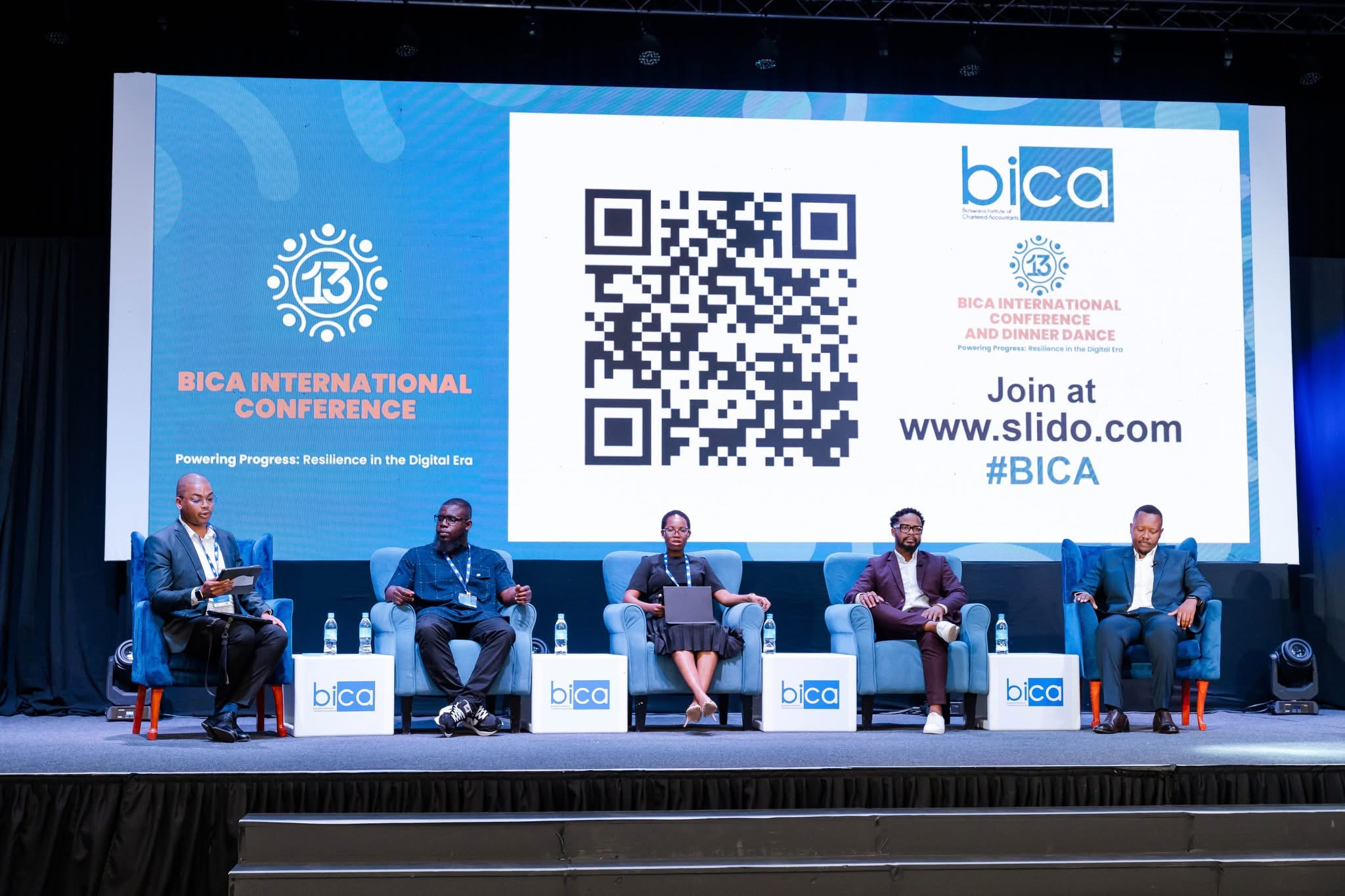
BICA International Conference panel discussion
About The Capital Media

Botswana's Hub for Economic Intelligence

The Capital Media is a Botswana-based media and knowledge platform dedicated to economic analysis, business dialogue, financial markets coverage, and entrepreneurship development. Through multi-channel content delivery across broadcast, public forums, publications, and digital platforms, we expand public access to economic information and informed dialogue with decision makers.

Our mission is to promote market access, support entrepreneurship, and facilitate meaningful business-policy conversations. We connect stakeholders across public and private sectors, fostering economic participation throughout Botswana and Africa.

Gaborone, BotswanaEst. 2020

The Capital Brief

Latest editions

Browse every edition. Free issues open instantly; subscriber editions unlock with your membership.

Edition 14·23 Sep 2026Latest Members

The rating that held, the transformation audited, and Kwa Nokeng comes to market

Three developments landed within weeks of each other, and each answers a different part of the same question: what Botswana's transformation costs, and who is paying for it. On 11 September, S&P Global Ratings affirmed Botswana's sovereign credit rating at BBB minus with a negative outlook. This was not a fresh downgrade. The downgrade happened in March. What S&P did this month was decline to cut further, crediting a reserves recovery and improved fiscal performance while holding the outlook negative on the strength of the deficit and debt trajectory. Days earlier, the BETP Secretariat published its first Mid Year Review, an 86 page account of the transformation programme's first six months. It is unusually candid, and it names the financing gap in its own risk register. And on 11 September, Kwa Nokeng Oil Holdings opened a public offer at BWP 1.00 per share ahead of a November listing on the BSE Domestic Main Board. Edition 14 examines all three, by institution, and names what needs to happen now.
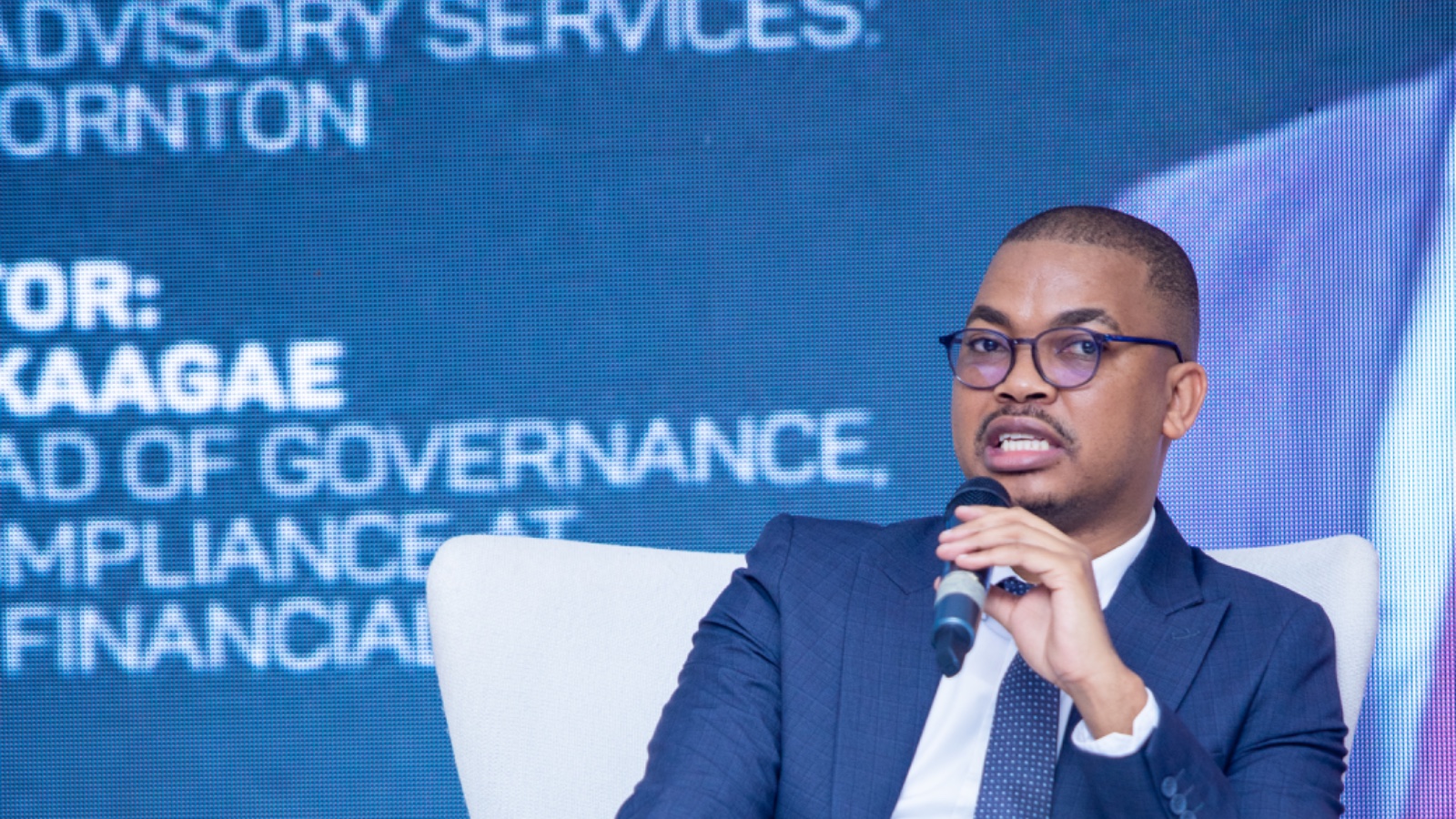
S&P, Credit rating, BETP, Kwa Nokeng, BSE, Fiscal policy, Sovereign debt, Capital markets, Listings
Cover for The rating that held, the transformation audited, and Kwa Nokeng comes to market

Previous Editions

Edition 13·19 Sep 2026 Members

Dangote Visits Gaborone Botswana, and the BSE is building a pipeline

Aliko Dangote, Africa's best known industrialist, spent part of last week in Gaborone. He met the President of Botswana and joined a roundtable hosted by the Botswana Stock Exchange alongside institutional investors, regulators and the country's pension funds. The visit was read in some quarters as a signal that the Dangote Petroleum Refinery might list on the BSE. It will not. The refinery is listing on the Nigerian Exchange and could raise around USD 5 billion, potentially one of the largest share sales on the continent. What the BSE is actually working on is more interesting than a single listing. The exchange is exploring a depository receipt structure that would let investors in Botswana and the region hold exposure to a foreign share through an instrument that trades locally, without opening a foreign account or managing currency conversion themselves. Edition 13 of The Capital Brief explains what a depository receipt actually is, why this is the third piece of a strategy assembled all year, what a receipt gives you and what it does not, and what it means for the business owner, the financial professional, the policymaker and the ordinary Motswana.

BSE, Dangote, Depository receipt, Capital markets, Internationalisation, Pension funds, Investment, Tabadul
Edition 12·3 September 2026 Members

The Vice President's diagnosis, and the gap between diagnosis and delivery

Two things happened in Botswana's public finances in August 2026 that are best read together. The Vice President and Minister of Finance, Ndaba Gaolathe, gave an eighty four minute interview to Spencer Mogapi on Advance Botswana, setting out the most candid account yet of what the government believes is wrong with the economy and how it intends to fix it. Days later, Parliament considered two loan authorisation bills, both moved by the same Minister, both financing the 2026 to 2027 fiscal year, both under Certificate of Urgency. Together they authorise USD 440 million in new borrowing. One of them, a syndicated facility from three domestic commercial banks, ABSA, First National Bank and Stanbic, authorises USD 270 million and tells us something about where Botswana's own capital is choosing to go. Edition 12 of The Capital Brief reads the interview against the Budget Speech, examines what the loan bills actually say, and names the gap between a coherent programme and the financing architecture it still lacks.

Public finance, Fiscal policy, Botswana Economic Transformation Programme, Syndicated loan, Ministry of Finance, Fund of Funds, Private credit, Parliament
Edition 11·19 August 2026 Members

BSE Equities cross P1 trillion: the milestone, the concentration, and what the market is actually measuring

On 10 August 2026, equities listed on the Botswana Stock Exchange crossed P1 trillion in combined market capitalisation for the first time, with the Domestic Companies Index closing at P60.72 billion and the Foreign Companies Index at P952.43 billion. This follows the earlier threshold reached on 11 May 2026, when total market capitalisation across all listed instruments first crossed P1 trillion. Two trillion Pula thresholds in three months on two different measures is a real marker of scale. The composition question does not negate the milestone. It qualifies how the figure should be read. Anglo American accounts for approximately 89.5 percent of all BSE listed equity value. Edition 11 examines the trillion Pula figure and what sits inside it, places Botswana's concentration against verified peer data from Kenya, Ghana, Nigeria and South Africa, explains who Anglo American actually is and what it holds in Botswana, and features Continental Reinsurance's public offer, the first reinsurer listing in the exchange's history.

BSE, Capital markets, Anglo American, Market capitalisation, Continental Reinsurance, ETF, Concentration, Listings
Edition 10·6 August 2026Free

Botswana's debt ceiling raised to 60%: what it means

Three signals arrived in the same month, all pointing at the same problem. Nigel Farage told Britain's new Prime Minister that the UK was borrowing faster than any country on earth other than Botswana. The World Bank warned that Botswana must enact a fiscal adjustment of roughly 4 percent of GDP to stabilise its debt trajectory. And the Botswana Development Corporation signed Statements of Intent with the Arab Bank for Economic Development in Africa for financing facilities totalling 100 million euro, going offshore for capital that is now easier to raise abroad than at home. Read separately, these are three unrelated headlines. Read together, they are one story. Botswana is running short of domestic capital, and both the sovereign response, raising the debt ceiling to 60 percent, and the parastatal response, borrowing abroad, address the shortage without addressing what causes it. Edition 10 of The Capital Brief examines both responses with the same analytical standard, applies four lenses, and names what needs to happen now.

Public debt, Fiscal policy, BDC, BADEA, Debt ceiling, Capital markets, IMF, World Bank, Primary dealerRead free
Edition 09·28 July 2026Free

Botswana signs two Gulf capital market agreements in ten days: what each commits to and what neither does

Between 10 and 16 July 2026, the Botswana Stock Exchange Group signed two separate agreements connecting Botswana's capital and commodity markets to the Gulf. The BSE joined Tabadul, the cross-border trading hub operated by the Abu Dhabi Securities Exchange, becoming its 11th member and the first African exchange on the platform. Days later in Singapore, following the 41st World Diamond Congress, the BSE Group signed a Memorandum of Understanding with the Dubai Multi Commodities Centre establishing what both parties describe as Africa's first multi-commodity sister-hub trading corridor. Taken together within ten days, with ministerial involvement in one, these describe a coordinated attempt to reposition Botswana as the African node in a Gulf-anchored trading architecture covering both securities and physical commodities. Edition 9 of The Capital Brief examines what each agreement actually commits to, what neither commits to, and the single date in late 2026 on which the credibility of both will first be tested.

Capital markets, BSE, Tabadul, DMCC, ADX, Gulf, Trade, Diamond sector, Economic diversificationRead free
Edition 08·21 July 2026Free

Botswana joins a USD 20 trillion index ecosystem: what the Satrix ETF listing means and what it does not

On 9 July 2026, the Botswana Stock Exchange listed three new Satrix exchange traded funds: the S&P 500 Feeder ETF, the MSCI World Feeder ETF, and the MSCI Emerging Markets Feeder ETF. For the first time, an investor in Botswana can hold broad global equity exposure through a locally listed instrument priced in Pula, without an offshore account or exchange control clearance. Edition 8 of The Capital Brief examines what this listing genuinely delivers, how feeder funds work, why the case for index investing is backed by evidence, and where the honest limits of this reform sit. Access has arrived. Participation has not, and the distance between the two is where the real work sits.

Capital markets, BSE, ETF, Satrix, Index investing, Financial literacy, InvestmentRead free
Edition 07·17 July 2026Free

Botswana's new tax regime: what changed and what it means for you

Edition 7 examines the 1 July 2026 tax reform package in full. Beyond the headline rate changes, this edition focuses on the Tax Administration Act, the structural instrument that most commentary has missed. Corporate tax rose to 24.5 percent. A new 27.5 percent bracket applies above P400,001. Capital gains tax is now payable within 28 days of disposal. VAT now applies to private medical services. But the more consequential development is that Botswana has built a unified administrative and enforcement spine across both income tax and VAT, with binding rulings, a new Tax Tribunal, voluntary disclosure, and an eight year record retention window. The Capital Brief analyses what this means for the business owner, the financial professional, the policymaker, and the ordinary Motswana.

Tax policy, Fiscal reform, BURS, Tax Administration Act, Income Tax, VAT, SMERead free
Edition 06·09 July 2026Free

The right tax, applied to the wrong problem: VAT on digital services and Botswana's fiscal instrument question

From 1 June 2026, Botswana taxes Netflix, Spotify, and foreign digital advertising through a new VAT on remote services. Edition 06 examines who actually pays, whether the reverse charge protects compliant businesses, and the harder question underneath the headline: is VAT the right instrument to correct Botswana's fiscal position, or a reasonable tax applied to a structural problem it cannot solve.

Tax policy, VAT, fiscal policy, digital economy, BURSRead free
Edition 05·01 July 2026Free

The New Botswana City: reading the project beyond the ribbon-cutting

Edition 05 examines the P25 billion New Botswana City project at the SSKIA Special Economic Zone: the land valuation question, the concession structure, and whether the MICE ecosystem required to make it work can realistically be built.

Economic development, infrastructure, investment, BDC, MICERead free
Edition 04·19 June 2026Free

Botswana, South Africa, and the trade finance gap: The four agreements and what they actually deliver.

The 6th Botswana-South Africa Bi National Commission signed four agreements in Gaborone on 21 May 2026. This edition examines what each agreement delivers beyond the signing ceremony, why the energy deal carries the most consequence for private investment, what the 93% agricultural import dependency from South Africa means as a structural risk, and why Africa's USD 74 to 92 billion trade finance deficit will constrain Botswana's AfCFTA ambitions regardless of how many bilateral agreements are signed.

Trade Policy. Regional Integration. AfCFTA. Infrastructure Finance. Agricultural Trade. DBSA.Read free
Edition 03·31 May 2026Free

Botswana Government Debt at a Glance

The 2.2% projection that cannot hold. What S&P and E-consult both found independently. The P514 billion financing gap in the transformation program. The Pula under structural pressure. Specific recommendations for four institutions.

Monetary Policy. Fiscal Policy. Foreign Exchange Policy. BETPRead free
Edition 02·19 May 2026Free

Financial Stability Council on Botswana May 2026

The Financial Stability Council on 7 May 2026. The system is stable. The risks are growing. And the single biggest threat is not the banks, the market, or a global shock.

Financial Stability and Regulation. NBFIRA. BOB. FIA.Read free
Edition 01·30 April 2026 Members

Rate Shock: Bank of Botswana Raises MoPR by 200 Basis Points

What the April 2026 MPC decision means for your loan, your business, your wallet, and the economy at large. Plus the structural liquidity story underneath the rate move.

Monetary Policy. Bank of Botswana
Get Started

Ready to amplify your economic voice?

Join Botswana's most credible economic media platform. Whether you're a corporation, policymaker, or entrepreneur, there's a partnership model built for you.